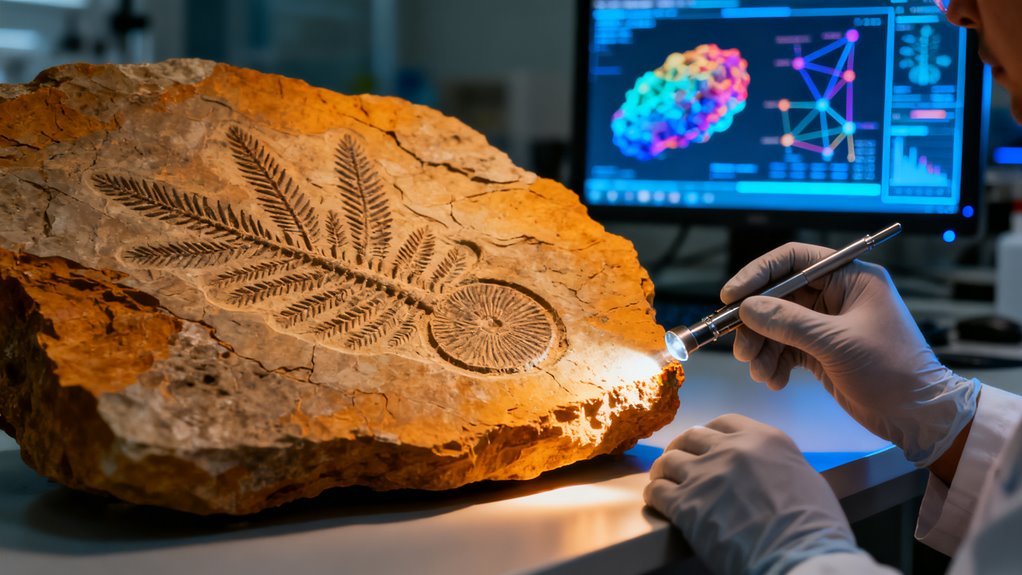
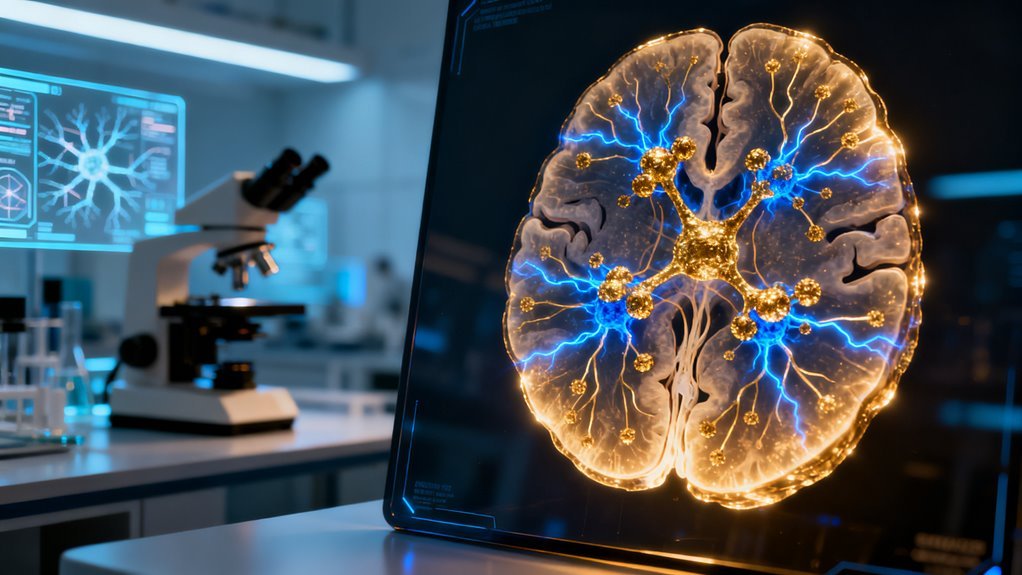
When a team of scientists in the UK pointed an AI system at a 567 million year old fossil and got back results that could rewrite the earliest chapters of animal evolution, the story that made headlines was about paleontology. But the real story is about what happens when machine learning gets good enough to see things humans physically cannot, and what that capability means far beyond ancient rocks.
The fossil in question, a specimen from the Ediacaran period discovered in Charnwood Forest, England, has been debated for decades. Researchers could never conclusively determine whether it was a genuine early animal or simply an artifact of geological processes mimicking biological form. The ambiguity was not a failure of scientific effort. It was a limitation of available tools. Pre-Cambrian fossils are notoriously difficult to interpret because the organisms lacked hard shells or skeletons, leaving behind impressions so faint and so easily confused with mineral patterns that even expert eyes frequently disagree on what they are looking at.
What changed is the application of AI driven X-ray microscopy that could parse the fossil at a resolution and analytical depth no human team could match unaided. The system simultaneously analyzed surface morphology, geochemical composition, and internal microstructures, then distinguished genuine biological signals from geological noise with a level of confidence that decades of traditional analysis never achieved. The conclusion: the specimen is biological in origin, pushing confirmed animal life further back in time and forcing a reconsideration of when complex multicellular organisms first appeared.
This matters for reasons that go well beyond updating a textbook date.
The Pattern Recognition Gap Is Closing
For years, the most celebrated applications of AI in science have involved protein folding (DeepMind’s AlphaFold), drug candidate screening, and genomic analysis. These are domains where the data is digital, structured, and relatively clean. What this fossil study represents is something different and arguably more significant: AI proving it can extract reliable biological conclusions from noisy, ambiguous, physical world data where human experts have been stuck for generations.
That is a meaningful inflection point. The gap between what AI can do with clean datasets and what it can do with messy, real world inputs has been one of the persistent limitations of the technology. Every time that gap narrows, entirely new categories of problems become solvable.
Consider the parallels. In medical imaging, AI systems from companies like Paige and PathAI are already identifying cancerous cells that pathologists miss. In materials science, tools built on similar principles are characterizing novel compounds at speeds that compress years of lab work into weeks. The fossil analysis sits squarely in this same trajectory: teaching machines to find signal in noise that overwhelms human perception.
Why the Cross-Domain Implications Are Not Hype
The research team behind this work explicitly noted that the same analytical framework has applications in drug discovery, precision medicine, and pathogen tracking. That might sound like the kind of speculative reach scientists include in papers to broaden funding appeal, but in this case the connection is direct and technical.
The core capability here is multimodal signal separation. The AI did not just look at the fossil’s shape. It integrated chemical data, structural data, and morphological data simultaneously, then used that integration to resolve an ambiguity that no single data stream could resolve alone. That exact capability is what makes modern pathogen identification so difficult. A tissue sample from a patient with an unknown infection contains biological signals from the host, from the pathogen, from environmental contaminants, and from the preservation process itself. Separating those signals reliably is the bottleneck, not sequencing or imaging in isolation.
Drug discovery faces an analogous problem. Candidate molecules interact with biological systems in ways that produce overlapping and often contradictory signals. Determining whether an observed effect is genuinely therapeutic or an artifact of experimental conditions is one of the most expensive and time consuming steps in pharmaceutical development. An AI system proven to reliably separate biological signal from noise in 567 million year old rock has obvious relevance to separating therapeutic signal from experimental noise in a living cell.
Who Benefits and Who Should Pay Attention
The immediate beneficiaries are researchers in paleontology and adjacent earth sciences who now have a tool that can resolve debates that have been open for decades. But the longer term beneficiaries are likely in biotech and pharma. If this multimodal analysis approach can be generalized and scaled, it could accelerate preclinical research timelines in ways that dwarf current AI assisted drug screening.
Investors watching the AI in science space should note that this is not a product announcement from a well funded startup. It came from an academic research team, which means the underlying techniques are likely to be published openly and available for commercial adaptation. Companies already building AI platforms for scientific analysis, think Recursion Pharmaceuticals, Insilico Medicine, or even broader platforms like Google DeepMind, could integrate similar approaches relatively quickly.
For the major AI labs, this study is another data point in a growing body of evidence that the most transformative applications of large scale AI may not be chatbots or code generation but scientific instruments. OpenAI, Google, and Anthropic have all signaled interest in scientific reasoning capabilities. DeepMind has been the most aggressive, with AlphaFold and its successors, but the fossil study suggests the opportunity space is far wider than protein biology.
What People Are Overlooking
The conversation around AI in science tends to focus on speed. AI analyzes data faster. AI screens compounds faster. That framing misses the more important point: AI is not just doing the same work faster. It is doing work that was previously impossible. No amount of additional time, funding, or human expertise was going to resolve the Ediacaran fossil debate using traditional methods. The data was too ambiguous and the analytical challenge too multidimensional for human cognition to crack unaided. The AI did not accelerate the process. It made the process possible for the first time.
That distinction has profound implications for how we think about AI’s role in science going forward. If AI is primarily a speed tool, its value is incremental. If it is an enabler of previously impossible analyses, its value is foundational. This study argues strongly for the latter interpretation.
The Direction This Points
We are moving toward a period where AI systems become standard analytical instruments in laboratories across disciplines, not as optional accelerators but as necessary tools for problems that exceed human analytical capacity. The precedent set by this fossil study, using AI to resolve a question that stumped experts for over half a century, will be cited repeatedly as justification for embedding AI deeper into scientific workflows.
The risk, as always, is over-reliance. An AI system that can distinguish biological signal from geological noise in one context may not generalize perfectly to another. The validation frameworks for these tools are still immature, and the scientific community has not yet established robust standards for when AI derived conclusions should be considered definitive versus suggestive. That governance gap will need to close as the technology spreads.
But the trajectory is clear. The fossil that sat in ambiguity for decades just got its identity confirmed by a machine that could see what humans could not. That sentence describes paleontology today. It will describe dozens of other fields tomorrow.
A 567 million year old fossil is forcing scientists to rethink some of the most fundamental assumptions about when and how animal life first appeared on Earth. That alone would be noteworthy. What makes this moment genuinely different is that artificial intelligence played a central role in extracting insights from that fossil, and from the genomes and protein structures surrounding it, that human researchers simply could not access before. This is not AI as a productivity shortcut. This is AI as an instrument of discovery, operating at a level of resolution that changes what questions scientists can even ask.
The Fossil Problem AI Actually Solved
For decades, paleontologists have stared at pre-Cambrian fossils and argued about whether faint structural patterns represented genuine biological tissues or mineral artifacts. The ambiguity was not a failure of expertise. It was a hardware problem. Conventional imaging and classification methods lacked the resolution and pattern discrimination needed to settle the debate.
The ambiguity in pre-Cambrian fossils was never a knowledge gap — it was a resolution gap.
That barrier is now falling. AI enabled X-ray microscopy pipelines can classify fossil microstructures and separate real biological signals from geological noise with a consistency that manual analysis never achieved. Machine learning systems layer multiple data streams together, combining fossil morphology, geochemical signatures, and internal structure to infer whether a specimen has a biological origin and where it might sit on the tree of life. This innovation mirrors the PULSE program being initiated by public health agencies to leverage AI for enhanced insights.
Phylogenetics at a Speed That Changes the Science
Revised fossil evidence feeds directly into phylogenetic reconstruction, and here AI is producing changes that are harder to see from outside the field but arguably more consequential. Building evolutionary trees from DNA sequence data has historically been computationally brutal. Traditional Bayesian and maximum likelihood methods can take days or weeks to process large alignments, and scaling them to whole genomes across dozens of species was often impractical.
Deep learning architectures now infer tree topologies directly from sequence alignments, compressing that computation dramatically while matching or exceeding the accuracy of established methods. One approach classifies groups of four species into small ancestry trees that then assemble into large scale phylogenies spanning broad taxonomic ranges.
Language model style tools, architecturally similar to the transformers behind GPT and Claude, read genomic mutation patterns and estimate coalescence times for gene pairs in minutes rather than days, reconstructing ancestral relationships across entire chromosomes. The speed gain is not just convenient. It is structurally important.
When you can rebuild phylogenies quickly and cheaply, you can test more hypotheses, incorporate more data types, and iterate in ways that were previously impractical. Researchers are now combining genomic, morphological, and phenomic data into integrated trees that sometimes shift the placement of early branching lineages. The animal family tree is not just getting more detailed. Parts of it are being rearranged.
Regulatory DNA and the Logic of Body Plans
Perhaps the most intellectually ambitious application sits at the intersection of genomics and developmental biology. AI models are now decoding the regulatory DNA sequences that governed developmental innovation in early animals. These are not protein coding genes but the control elements that determine when, where, and how much a gene is expressed during development.
Sequence based analysis exposes conserved regulatory motifs shared across distant lineages alongside lineage specific elements that drove body plan diversification. AI predictions of regulatory element activity in developing tissues reveal how these control systems changed across vertebrate and mammalian evolution. Some of the most striking findings involve human specific regulatory changes, concrete examples of how small genetic shifts in noncoding DNA produced major morphological outcomes.
This line of work connects directly to broader trends in AI driven biology. The same transformer architectures that power protein structure prediction tools like AlphaFold are being adapted to read regulatory grammar. The underlying insight is the same: biological sequences contain structured patterns that deep learning can decode more effectively than rule based methods.
Why This Matters Beyond Paleontology
It is tempting to file this under “interesting science, limited practical impact.” That would be a mistake. The techniques being refined on ancient fossils and deep evolutionary questions are the same techniques that will increasingly drive drug discovery, synthetic biology, and precision medicine. Learning to read regulatory DNA at scale has direct implications for understanding disease mechanisms and designing gene therapies.
The phylogenetic tools being tested on animal evolution will be applied to tracking pathogen evolution, understanding antibiotic resistance, and reconstructing the spread of emerging viruses. These same genomic AI approaches are already proving valuable in malaria research, where they help trace the evolutionary history of insecticide resistance in mosquitoes that spread the disease. There is also a strategic dimension. The organizations and research groups building these AI pipelines are accumulating proprietary datasets and methodological advantages that compound over time.
In computational biology, as in large language models, the groups that move first on data and infrastructure tend to maintain their lead.
What People Are Overlooking
The conversation about AI in science still gravitates toward protein folding and drug design. Evolutionary biology and paleontology get far less attention, partly because the commercial applications are less obvious and partly because the field is smaller. But the methodological innovations happening here are transferable, and they are stress testing AI tools against problems where ground truth is genuinely uncertain.
That makes this work a valuable proving ground for AI reliability in scientific contexts more broadly. There is also an underappreciated risk. As AI tools become central to classifying fossils and building phylogenies, the field inherits all the familiar problems of model opacity and reproducibility. If a neural network reclassifies a fossil or rearranges a branch of the tree of life, other researchers need to be able to interrogate that conclusion.
The paleontology community is small enough that establishing norms for AI transparency now, before these tools become ubiquitous, is both feasible and urgent.
The Bigger Picture
What is unfolding in evolutionary biology mirrors a pattern visible across science: AI is not replacing domain experts but is giving them instruments powerful enough to reopen questions that had been effectively closed for lack of data or computational power.
The result is not incremental refinement. It is a genuine revision of foundational narratives. The origins of animal life on Earth seemed like a settled, if incomplete, story. It is now an active research frontier again, and AI is the reason. That shift tells us something important about where artificial intelligence creates the most value. Not always in building new products or automating existing workflows, but sometimes in making it possible to see what was always there but never visible before.