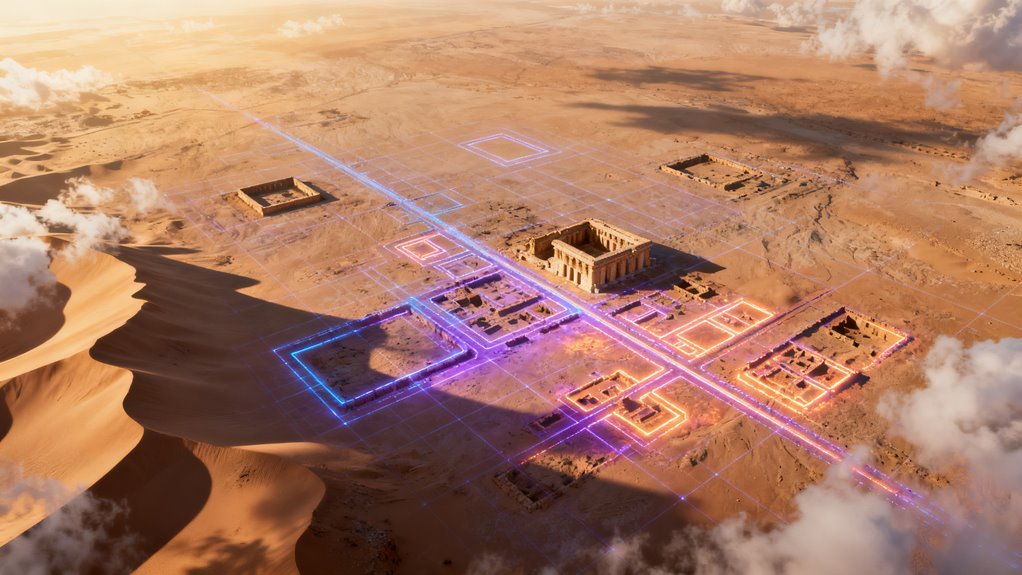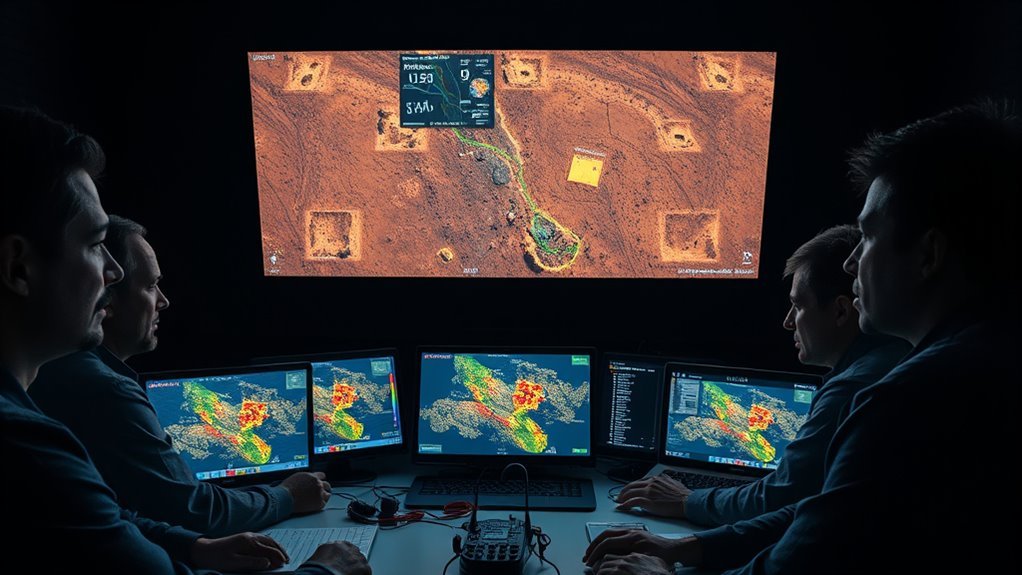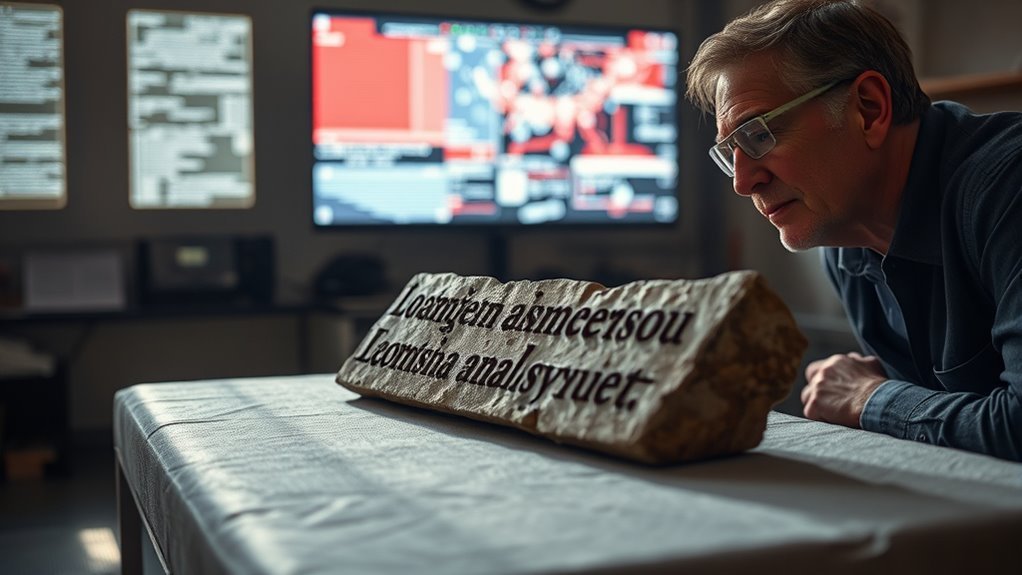

Transforming how historians engage with the Roman past, Google DeepMind’s Aeneas model applies generative AI to the restoration, dating, and contextualization of ancient Latin inscriptions, enabling more precise reconstructions of damaged texts. As the first artificial intelligence system explicitly designed for contextualizing ancient inscriptions, Aeneas targets the longstanding challenges posed by fragmentary Roman texts carved on stone and other durable media. The model is intended to interpret damaged passages, attribute inscriptions to specific regions and time periods, and propose plausible restorations for missing words and characters. By automating searches for parallels across vast epigraphic corpora, it reduces the need for manual comparison and accelerates work that previously depended on painstaking expert cross-referencing. Named after the mythological hero Aeneas, the tool underscores a deliberate connection between modern machine learning and Roman cultural heritage.
Aeneas is implemented as a transformer-based generative neural network tailored to the linguistic and material specificities of Latin epigraphy. The overall system consists of three main neural components, each optimized for a distinct epigraphic task: restoration of incomplete texts, geographical attribution, and chronological dating. For restoration, the model can infer missing sequences of characters or words even when the length of the gap is unknown, a capability that surpasses earlier methods restricted to fixed-length completions.
In geographic mode, it predicts the most likely origin of an inscription and maps its output to one of 62 Roman provinces that structured administrative life across the empire. The chronological network provides fine-grained temporal estimates, assigning dates that on average fall within approximately 13 years of the true inscription year. The government’s recent predictions of AI productivity gains highlight the transformative potential of technology in various fields, including historical research.
Training Aeneas required assembling one of the largest curated corpora of Latin inscriptions ever used in computational research. The model draws on harmonized data from Epigraphic Database Roma, Epigraphic Database Heidelberg, and the Epigraphik-Datenbank Clauss-Slaby, integrating transcription conventions and metadata across repositories. Combined, these sources provide more than 176,000 inscriptions from across the Roman world, amounting to roughly 16 million characters of text.
The dataset spans centuries, from the early Republic to late antiquity, and covers territories ranging from Roman Britain to regions bordering Mesopotamia. Essential to its functioning, the corpus includes both textual transcriptions and high-quality images of carved surfaces, allowing the system to learn from letterforms, layout, and damage patterns as well as words. Multimodal processing lets Aeneas jointly analyze partial text strings and visual scans of an inscription, retrieving historically relevant parallels that share formulas, personal names, or institutional references.
Aeneas currently sets new benchmarks across restoration, dating, and geographic attribution tasks, outperforming previous computational approaches on held‑out test sets drawn from major epigraphic databases. Extensive historian collaboration has evaluated its probabilistic estimates and contextual suggestions, demonstrating its usefulness as a systematic partner in debates over the dating, attribution, and interpretation of contested inscriptions. In practice, the tool functions as a cooperative aid rather than a replacement for scholarly judgment, offering ranked hypotheses about missing text, likely dates, and provenance that experts can evaluate against broader historical evidence.
Its deployment marks a shift toward data-driven epigraphy, with large-scale machine learning augmenting and accelerating traditional methods of interpreting the Roman past for contemporary historical research.