

Artificial intelligence is finally starting to do something historians have wanted for generations. It is moving beyond keyword search and neat demos and into the messy reality of damaged manuscripts, cryptic inscriptions, and fragile archives. That matters right now because a wave of multimodal systems such as Google’s Gemini is turning labor-intensive scholarly work into workflows that can be explored in minutes, while still demanding serious human judgment to avoid shallow or misleading conclusions. The recent Hugging Face data breach highlights the critical importance of safeguarding sensitive datasets as AI systems become increasingly integrated into research workflows.
What is emerging is not a magic machine that understands antiquity on its own. It is a new kind of research partner that sits on top of years of domain-specific models and hard-won datasets, and that can read images, layout, and text together. The result is a shift in how historians, epigraphers, and curators think about what is even feasible when they confront a damaged folio or a worn stone.
A research partner fusing image, layout, and text to redefine what damaged artifacts can yield
How we got here from inscription models to conversational workflows
The current Gemini workflows for antiquity did not appear in a vacuum. They build on earlier specialist systems such as Ithaca and Aeneas, deep neural networks designed specifically to restore, date, and place ancient Greek and Latin inscriptions. Ithaca focuses on textual restoration and attribution, helping scholars infer missing characters and likely places and times of writing based on large epigraphic corpora. Aeneas extends this by contextualizing Latin inscriptions, combining partial transcriptions and image scans to propose dates, origins, and restorations, and cross-referencing a database of roughly one hundred fifty thousand inscriptions from across the Roman world.
Those models were powerful but still required technical workflows and specialized interfaces. The Predicting the Past skill inside Google’s Antigravity platform changes that dynamic by grounding Gemini directly in Ithaca and Aeneas and exposing them through plain language. Historians can now ask questions about Greek and Latin inscriptions the way they would talk to a colleague, while the system silently orchestrates restoration, dating, geographic mapping, and pattern detection across thousands of records. The technical core remains the specialist models, but Gemini provides the reasoning layer, the conversational interface, and visualizations that make advanced epigraphy accessible without coding.
This evolution matters for trust. Instead of relying on a general-purpose chatbot that might hallucinate its way through Roman history, the workflow ties Gemini to constrained, expert-trained models with well-understood datasets and evaluation metrics. That architectural choice is one of the clearest signals that serious historical research is being taken seriously rather than treated as just another generative content task.
What Gemini actually does with ancient texts
On top of this foundation, Gemini is being used as a multimodal engine for manuscripts and inscriptions that blend text, images, and complex layout. In practical terms, that means historians can feed printed incunabula, illuminated manuscripts, Roman and Greek stone inscriptions, extensive Ottoman Turkish archives, and museum collection material into a single pipeline. The system can read warped pages, irregular scripts, and heavily damaged folios, including items such as a late fifteenth-century chronicle with handwritten marginal notes, and produce candidate transcriptions and translations that experts can then critique.
In these workflows, Gemini does more than run optical character recognition. It couples detailed image analysis with handwriting recognition and language modeling. For marginal notes in the Nuremberg Chronicle, for example, researchers provided high-resolution images of a five hundred-year-old page to Gemini three point zero Pro and asked it to read the medieval Latin abbreviations, translate them into English, and infer their meaning in context. The model reconstructed degraded handwriting, resolved ambiguous abbreviations, and uncovered that the notes were a sixteenth-century attempt to reconcile conflicting biblical timelines by converting the birth year of Abraham into a modern chronology. The entire process reportedly completed in about an hour at minimal computational cost, highlighting the practical efficiency of this kind of targeted deployment.
That case is important not because it proves that Gemini is always right, but because it illustrates what multimodal perception adds. A human scholar with the same scans could in principle do the same work, but it might take days or weeks. The system offers a rapid, structured hypothesis about what the text might say, which can then be confirmed or disputed through traditional methods.
Conversing with inscriptions instead of just searching them
The Predicting the Past skill shows a different dimension of impact. Here, Gemini is not just transcribing or translating; it is orchestrating a whole research conversation around inscriptions. By anchoring the assistant in Ithaca and Aeneas, historians can explore who likely wrote a particular inscription, when and where it was carved, how its formulas compare to thousands of other texts, and what patterns emerge across regions and time periods. A single dialogue can trigger restoration suggestions, geographical visualizations, and statistical analyses that previously required separate tools and manual database queries.
This shift from tool to collaborator changes expectations. It lowers the barrier for historians who are deeply expert in languages and material culture but do not want to spend years learning epigraphic software or scripting environment workflows. At the same time, it raises the stakes for evaluation. If answers arrive through a fluent conversation rather than a clearly constrained query interface, researchers need strong habits around verification, cross-checking, and explicit documentation of what the system did.
Beyond stone and parchment multimodal research platforms
Gemini is also appearing inside broader research platforms such as Codex, a multimodal application that uses a three-agent system to reconstruct ancient knowledge across Hebrew, Greek, Syriac, Coptic, Latin, and other Near Eastern traditions. In that setup, a Gemini three Pro agent functions as a digital philologist, performing deep optical character recognition on damaged manuscripts, running extended reasoning for textual reconstruction, and analyzing grammar and historical context. A Gemini Flash agent handles live interaction and video frames, while a comparative engine checks variants across traditions and produces structured reports on scribal changes and authenticity markers. Alongside Codex, platforms like Codeex apply similar multi-agent architectures to reconstruct fragile, damaged manuscripts in real time across multiple ancient languages and to democratize access to these texts.
Elsewhere, Gemini two point five Pro has been evaluated on a mix of printed works and illuminated manuscripts, estimating publication dates, locations, materials, and storage considerations and transcribing and translating fifteenth-century Schwabacher typefaces with enough precision to identify the exact page, column, and line for particular facts. These studies suggest that the system is not limited to one language or medium but can adapt across Latin, Greek, Ottoman Turkish contexts, and regional languages when coupled with the right training data and domain constraints.
Combined with the manuscript and inscription pipelines described earlier, this points to a broader trend. Multimodal AI is turning disparate archives into interlinked, navigable datasets. Clay tablets, stone slabs, picture Bibles, handwritten chronicles, and printed pamphlets can all be drawn into continuous workflows that span transcription, translation, contextual analysis, and visualization.
Performance gains and what the numbers really imply
Empirical evaluations on historical material show that Gemini three transcription can reach character error rates around zero point five six percent and word error rates near one point two two percent on challenging sources. Error reductions of roughly from fifty to seventy percent compared with earlier models indicate genuine technical progress and suggest that benchmark tasks once considered unreachable by automated handwriting recognition are now within range.
However, those numbers need careful interpretation. In modern applications, a one percent word error rate might be acceptable for casual use. In historical research, the single word that is wrong may be the name of an otherwise obscure person, the date of a treaty, or a unique place name. A small error rate on average can still hide systematically difficult cases, such as rare abbreviations, hybrid scripts, or intentional cryptic notation. That is why responsible projects tend to treat Gemini as a hypothesis generator rather than a final arbiter, with experts reviewing outputs and documenting where machine suggestions were accepted, rejected, or left unresolved.
Limitations, safety filters, and the role of human judgment
The current workflows also reveal clear limitations. Script mixing and occasional prompt noncompliance in Ottoman Turkish manuscripts show that the model can stumble when confronted with pages that blend languages, scripts, and editorial marks, a common feature of early modern sources. Translation pipelines face a different challenge. In work on an eighteenth-century Ottoman Turkish text known as Prisoner of the Infidels, safety filters reportedly blocked segments of the output, leaving a substantial portion of the manuscript untranslated and forcing experts to reconstruct sensitive passages manually. The text itself is an early eighteenth-century autobiography preserved in manuscript form in the British Library and is valued as a detailed account of life in early modern Europe from an Ottoman perspective.
This tension between safety and completeness is not unique to Gemini, but it is amplified in historical domains. Modern content policies are generally designed around contemporary harms, yet historical documents often contain violence, prejudice, or explicit content that is integral to understanding the past. Blanking out those passages can distort the record, while unfiltered reproduction raises ethical and legal questions. Navigating that space requires clear governance. Researchers need transparent settings around filters, the ability to log when and why content was suppressed, and agreed protocols for handling sensitive material.
There is also the more prosaic issue of credibility. Fluent language models can make speculative reconstructions sound authoritative. If a scholar or curator treats a Gemini output as a primary source instead of a suggestion, errors can quietly enter the secondary literature. The risk is not that the machine is malicious, but that its confidence is easy to misread. Strong documentation practices, such as citing when AI was used in transcription or restoration and specifying which model and version, are part of the remedy.
Implications for institutions, industry, and society
For museums, libraries, and archives, these systems are both an opportunity and a logistical challenge. On one hand, multimodal AI can dramatically accelerate digitization and cataloging, turning stacks of undeciphered tablets or marginalia-laden folios into searchable corpora that attract new research and public engagement. On the other hand, institutions need to invest in infrastructure, legal frameworks for data sharing, and staff training to ensure that outputs are validated and that provenance is maintained.
For technology companies and businesses, the Gemini antiquity workflows exemplify a broader strategic pattern. Domain-specific models such as Ithaca and Aeneas are wrapped by general-purpose assistants that provide interface and reasoning, creating products that feel conversational while resting on deep vertical expertise. The same architecture can be applied far beyond ancient texts to legal archives, scientific literature, or corporate records. Firms that understand both the opportunities and the constraints will be better positioned than those that treat generative AI as an all-purpose oracle.
Societally, the biggest impact may be on who gets to participate in historical interpretation. If reading a difficult inscription or marginal note no longer requires a rare combination of linguistic and technical skills, more scholars and students can engage directly with primary sources. That could diversify perspectives on the past and surface overlooked narratives. At the same time, it increases the responsibility of historians and educators to teach critical reading skills that include understanding how AI suggestions were produced, what data they rest on, and where they might be biased.
What to watch next
Taken together, the current Gemini workflows show that multimodal AI can widen access to previously obscure sources while still depending on human expertise to verify readings and refine interpretations. The most constructive way to view these systems is as precise analytical lenses. They turn damaged traces into testable hypotheses, illuminate patterns that would be hard to see by hand, and free scholars to focus on framing questions rather than grinding through every letter of a difficult script.
Over the next few years, the most important developments will likely be less about headline cases and more about standards. Evaluation metrics designed for historical tasks, documentation norms for AI-assisted scholarship, and governance frameworks for safety filters in archival work will determine whether these tools become trusted parts of the research ecosystem or remain interesting but marginal additions. If those foundations are built well, the ability to converse with antiquity through systems like Gemini will not replace historians. It will give them new ways to ask questions and new evidence with which to answer them.
Frequently Asked Questions
How Does Google Gemini Protect Sensitive Cultural Data From Unauthorized Access?
How Google Gemini Protects Sensitive Cultural Data From Unauthorized Access
In museums, archives, media houses, and indigenous communities, the decision to expose cultural collections to generative AI is no longer theoretical. Sensitive material, from oral histories to restricted ceremonial recordings and contested political narratives, is starting to flow through large language models. The stakes are high. Organizations want powerful tools for search, translation, and analysis, but they cannot afford accidental leaks, cross-border transfers, or silent reuse of their data to train commercial models.
Google is positioning Gemini as a platform that can respect these boundaries rather than erode them. The protections are not perfect and they are uneven across product tiers, yet for institutions that need strong controls, there is now a recognizably sovereign stack that did not exist in the first wave of generative AI.
From generic cloud storage to cultural sovereignty
A decade ago, the main compliance conversation around cloud services was about basic encryption and certifications. Data typically floated across regions as vendors optimized for latency and cost. For cultural institutions, that raised obvious problems. Many are bound by archival law, indigenous data sovereignty principles, or national regulations such as the European General Data Protection Regulation, which demand that certain categories of information stay within specific jurisdictions.
Gemini builds on Google Cloud investments in data residency and sovereign cloud to give customers much tighter control over where data lives and who can touch it. Gemini Enterprise restricts data residency to United States and European Union multiregion locations for its core APIs, meaning customers can confine stored application data to those jurisdictions at rest. The Gemini Enterprise Agent Platform further guarantees that data stored at rest in a customer-chosen location remains physically in that location, regardless of which endpoint is used to call the model. That is a significant shift from older designs where a global endpoint could quietly move content between continents.
Google has also created a broader sovereign cloud framework where primary data stays in the selected region and does not move while administrator privileges are logged, audited, and tightly controlled. Together, these features make it more realistic for custodians of cultural heritage to engage with Gemini without automatically surrendering jurisdictional control.
Data residency controls that actually matter
Data residency is not just a legal phrase. For cultural organizations, it is often the first line of defense against unwanted access or political interference. Gemini provides several practical mechanisms.
Gemini Enterprise data residency controls require customers to use United States or European Union multiregion data stores and applications rather than global ones. When data stores and apps are created in those multiregion locations, their content at rest is confined to that geography. The Agent Platform extends this by ensuring that custom resources such as model weights and metadata remain in the specific Google Cloud location that the customer configured, with residency maintained regardless of the endpoint used for inference.
For workloads that involve conversational analytics, Google exposes regional and multiregional endpoints where the location chosen by the customer governs where data at rest is stored. Those commitments cover specific resource types such as agents, configurations, and conversation histories. The documentation is explicit that they do not apply to every kind of service data and that data in transit can move outside the region. This level of transparency is important because it helps institutions understand which layers of their stack are genuinely resident and which remain globally distributed.
Gemini in Workspace applies these residency ideas directly to everyday productivity tools. Customers can choose whether data is stored and processed in the European Union or the United States and can confine Gemini processing for Workspace applications to those jurisdictions. For resilience, they can also maintain an independent copy of their Workspace data in a country of their choice using local storage, which matters for cultural institutions that are required to keep local archives even when they adopt cloud services.
Sovereign data boundaries and limited human access
Technology controls only work if human access is constrained as well. Google has started to treat Gemini data as part of a sovereign boundary built on its data boundary capabilities in Google Cloud. Gemini in Workspace allows organizations to limit data access for support personnel to a specific region so that employees outside that jurisdiction cannot view sensitive customer information for support or troubleshooting.
Within Google Sovereign Cloud, customers can customize data location and access controls. Primary data remains in a customer-selected region and does not move while administrator rights are logged and auditable. Customers manage encryption keys, including keys stored externally, and can specify which staff regions have access to particular datasets. Optional partners can oversee key management and audit for clients with especially strict requirements. For custodians of cultural data, this makes it possible to insist that any human who might need to access their archives, whether for technical support or compliance review, is subject to the same jurisdictional constraints and oversight as their own staff.
Access Transparency adds another layer. Google documentation for Gemini Enterprise lists Access Transparency as one of the core security controls alongside data residency, customer-managed encryption keys, and VPC Service Controls. This feature gives customers insight into when and how Google staff access their data, which is critical for trust in contexts where even rare exceptional access could be sensitive.
Encryption and customer control of keys
Encryption used to be largely invisible to customers. Vendors owned and managed the keys, and clients had to trust that internal safeguards would prevent misuse. Gemini Enterprise introduces a much more assertive model based on customer-managed encryption keys in Cloud Key Management Service.
When organizations enable customer-managed encryption keys for Gemini Enterprise, they create and control their own keys in Cloud KMS rather than relying on Google-owned keys that protect their data at rest. They can decide the protection level, cryptographic strength, and key type, and they choose the geographic location where keys are stored and used, which is important for meeting data locality rules. They also set rotation schedules, define usage and access permissions, and use Cloud KMS audit logs to track key operations and control key lifecycles.
The same controls extend beyond the main data stores. Gemini Enterprise documentation and technical write-ups explain that when data stores are protected with customer-managed keys, that protection can also cover app-owned information such as search session data and follow-up interactions associated with those stores. In practice, this means that not only the underlying cultural archive but also the derived analytic traces are encrypted under keys the institution controls.
Witness analyses of Gemini security further note that customer-managed encryption keys can be integrated with external key managers and hardware security modules, giving organizations an option to keep cryptographic material outside Google infrastructure while still encrypting Gemini Enterprise data at rest. For sensitive cultural collections, this moves encryption closer to true client-side control. If the customer revokes access or rotates keys in a way that removes decryption capability, then Gemini cannot read the protected data even though it physically stores the ciphertext.
Network isolation and access policy enforcement
Encryption and residency do not address every risk. Misconfigured services, compromised accounts, and overly broad connectivity can still lead to unauthorized access. For that reason, Gemini Enterprise supports VPC Service Controls, which allow organizations to define network perimeters around their Gemini resources and associated data. When used well, these controls reduce the chance that data can be exfiltrated to unauthorized projects or external endpoints, even if credentials are stolen.
Google encourages administrators to pair these network perimeters with strong organizational policies. Workspace and sovereign cloud documentation describe the way customers can limit access for support staff to specific regions and heavily audit administrator actions. Combined with Access Transparency logs, this creates an environment where any unusual access to sensitive cultural datasets should be visible and traceable rather than silent.
How Gemini treats customer data and model training
One of the most contentious questions for cultural institutions is whether their data will be used to train or refine commercial foundation models. The security and compliance materials for Gemini Enterprise emphasize isolation of customer data and focus on controls such as data residency and customer-managed encryption keys, but they do not automatically solve the training question on their own.
In practice, many enterprise generative AI offerings, including Gemini, separate contractual commitments about data usage from purely technical controls. Cultural organizations need to study and negotiate those commitments carefully, especially if they are working with collections that have community-specific restrictions on reuse or require explicit consent for derivative works. The existence of strong residency and encryption guarantees does not by itself answer whether prompts or documents will influence future versions of the model.
This is an area where historical experience matters. Early adopters of generative AI often discovered after the fact that their data had been used in ways they did not fully anticipate. The current generation of enterprise offerings is more explicit, and customers now have more leverage to demand hard boundaries. Gemini’s security architecture makes such boundaries more enforceable, but inserting sensitive cultural data into any large model ecosystem remains a decision that requires governance and community input.
Limitations and evolving risks
Despite the progress, there are real limitations in how Gemini protects cultural data. Data residency commitments for the Conversational Analytics API apply to specific resources and focus on data at rest. They explicitly do not extend to all states of data in use, and they exclude some forms of service data and data in transit. Global endpoints can route and process data anywhere, which means that organizations that care about sovereignty must be vigilant about always using jurisdictional endpoints for relevant workloads.
Regional data residency controls are not uniformly available across all Gemini tiers either. Analysis of Gemini compliance and privacy features points out that only certain Workspace-based plans can lock storage into dedicated European regions and that free or consumer-oriented tiers do not offer the same residency guarantees. Cultural institutions that begin experimenting with Gemini through consumer tools may therefore receive a misleading impression of the protections available to them unless they migrate to enterprise or Workspace deployments.
There is also the human factor. Technology controls can be misconfigured. Policies can be poorly communicated. Audit logs can be ignored. For communities that have painful histories of extractive research or surveillance, these are not abstract concerns. Robust protection of cultural data requires not only the technical layers that Gemini provides but also institutional practice and oversight.
What this means for cultural institutions
For organizations safeguarding sensitive cultural material, Gemini’s approach represents a meaningful evolution. Strong data residency controls for enterprise and Workspace deployments allow archives and cultural collections to remain in chosen jurisdictions both at rest and often in use, while jurisdictional endpoints limit where machine learning processing occurs. Sovereign data boundaries combined with regional support staff access limitations reduce the risk that external personnel can view or extract sensitive content without oversight.
Customer-managed encryption keys and optional external key managers give institutions practical control over who can decrypt their data and when. These features collectively raise the bar for unauthorized access, whether by external attackers, insider threats, or even the provider itself. They do not erase all risk, and they do not fully answer questions about training and reuse, but they make it possible to design Gemini deployments that respect local laws, community expectations, and cultural sovereignty in ways that were difficult in earlier generations of cloud AI.
The forward-looking task for cultural institutions is to treat Gemini’s controls as building blocks rather than complete solutions. Governance frameworks need to specify which collections may be exposed to generative AI under what conditions and which endpoints and encryption configurations must be used. Agreements with providers should explicitly address training, evaluation, and derivative use. If those pieces come together, then tools like Gemini can help unlock valuable insights from cultural data without repeating the history of digital extractivism that many communities rightly fear.
Can Researchers Without Coding Skills Use Gemini to Analyze Their Own Manuscript Collections?
Researchers who work with large manuscript collections are seeing a real change in what they can do on their own. Powerful AI models such as Google Gemini are turning tasks that used to require programming expertise into workflows that can be driven from a browser and simple menus.
Why Gemini matters for manuscript based research
Gemini is not just another text assistant. It is a family of multimodal models designed from the start to understand and reason across text, images, audio and video in a single system. For manuscript scholars this matters because historical documents rarely arrive as clean digital text. They come as scanned images, complex layouts, marginalia, mixed scripts and often as recordings of readings or oral interviews that accompany the written record.
The technical reports on Gemini describe several model sizes, from the largest Gemini Ultra through versions such as Pro and smaller variants, each tuned for different workloads. Newer generations such as Gemini 1.5 increase the amount of context the model can handle, letting it work with millions of tokens across multiple documents, videos and audio segments in one session. In practice that means a single analysis run can cover an entire archival folder or a long compiled corpus instead of a handful of pages at a time.
Google positions Gemini as a general research assistant that can help with tasks such as long document question answering and cross media understanding. The documentation for Gemini for Research and Deep Research emphasizes precisely these capabilities, describing how the model can read many files, follow user defined research prompts and return structured reports rather than only short answers. For humanists and social scientists who work with manuscript collections this brings AI closer to the way they actually read and interpret sources.
A brief look at how we got here
Earlier generations of language models focused mainly on text and short prompts. Researchers who wanted to use them for archive work often had to build their own pipelines, write scripts to batch process documents, and integrate separate tools for images, audio and metadata. This effectively excluded many scholars who did not have the time or training to write code.
Gemini changed this in two important ways. First, it was trained jointly on text, images, audio and video so that the model can reason across formats instead of treating each medium as an isolated problem. The technical reports show examples of the system reading tables and charts inside documents, understanding layout and visual structure, and combining that with strong performance on reasoning benchmarks.
Second, the Gemini ecosystem adds user facing environments such as the Gemini API, Vertex AI tools and research oriented interfaces, which expose complex capabilities through configuration panels and prompts instead of programming interfaces.
Recent work on Gemini Embedding 2 continues this trajectory. It provides a single embedding space that maps text, images, video, audio and documents together, enabling search, clustering and classification across different media types in more than one hundred languages. That is a technical detail, but it underpins practical features such as semantic search across scanned pages and transcripts, or grouping related passages that share themes even when they do not use identical wording.
What non coding researchers can do today
The central question is simple. Can researchers without coding skills realistically use Gemini to analyze their own manuscript collections? The answer is yes, but with nuances that matter.
Documentation and tutorials from Google and independent educators describe a growing set of workflows built around Gemini that are designed for people who do not program. Workshops on building mini applications with Gemini highlight that researchers can design tools that support teaching, research and operational tasks using form based configuration rather than code. Community resources focused on Gemini agents also emphasize that scholars and professionals can automate assistants for their work with guidance rather than needing to write scripts from scratch.
For manuscript analysis there are several concrete, non coding routes.
Translation and language access
Interfaces such as the Vertex AI Studio translation console let users paste text, select source and target languages, and run translations through a graphical interface. Because Gemini is trained across many languages and supports multimodal inputs, it can translate text extracted from manuscript images and align that with summaries or explanations. This is especially useful for collections with mixed language marginal notes or multilingual correspondence.
Summarization and thematic extraction
Gemini can summarize long documents and highlight key concepts, arguments and entities across many pages. With long context capabilities, Gemini 1.5 is able to maintain recall across large document sets and produce answers that refer back to specific passages. Through environments like Vertex AI and research oriented consoles, researchers can upload manuscripts or transcriptions and request structured outputs such as chapter summaries, lists of recurring themes or timelines of events using plain language prompts.
Search and organization across collections
Gemini Embedding 2 allows text, images, audio and documents to be embedded into a common representation, which enables semantic search and clustering across varied materials. In practical terms a scholar can index a collection and then ask for all passages related to a concept, a location or a person even when the terms appear in different languages or formats. This can be accessed through cloud platform interfaces without direct coding by relying on provided workflows and templates.
Speech and performance based work
Gemini supports audio understanding and can work with speech segments as part of its multimodal input. For researchers who focus on oral readings of manuscripts, recorded performances or interviews that reference written sources, this opens up analysis that includes both the text and the spoken delivery. Tutorials show that users can work with speech to text and speech oriented translation features through guided UIs, which lowers the barrier for incorporating performance into manuscript studies.
Custom experts and guided tools
Features such as custom Gemini based experts sometimes called Gems let users define specialized assistants by describing their goals and providing example materials. Videos and documentation explain that creating these experts is a process of configuration and prompt design rather than coding, which enables a manuscript scholar to build a tailored assistant focused on a specific archive or research question.
Together these capabilities build a picture of a system where non coding researchers can realistically perform translation, summarization, search, thematic analysis and even multimodal study of manuscripts by learning interfaces and prompt design rather than programming.
Practical workflows for manuscript collections
To understand what this looks like in practice, imagine a historian who has digitized a set of nineteenth century letters, many of them handwritten and some annotated with later comments.
They start by using optical character recognition or a document upload tool connected to Gemini through a workspace interface. Gemini reads both the raw text and any image regions containing diagrams or marginal notes, thanks to its native training on text and images together. The historian then issues a prompt such as “Summarize each letter and identify references to early industrial disputes.” Gemini can produce letter level summaries and highlight relevant passages because it can reason over long context and track mentions across multiple documents.
Next, the historian wants to compare the tone and themes of letters written by different correspondents. By relying on Gemini Embedding 2 through a configured workflow they can embed each letter and cluster them according to semantic similarity, revealing groups that share concerns about labor, family or politics. This clustering can be visualized in a research environment, and the historian can inspect specific groups to form qualitative interpretations.
If parts of the collection are in another language, such as French or German, the scholar can paste or upload those passages into the translation console. Gemini provides translations and can be asked to explain idiomatic expressions or historical terms to support interpretation. The historian does not need to write any code to carry out these steps, but they do need to learn how to frame precise prompts, choose models and organize outputs, which is closer to research design than software engineering.
Similar workflows apply to literary scholars analyzing drafts and revisions, philologists working with mixed script documents, or social scientists examining manuscript field notes. In each case Gemini is capable of working across text, image and audio data as a single problem, and platform tools expose that capability in ways that a careful non technical researcher can control.
Limitations and risks that still matter
The accessible interfaces around Gemini do not remove all complexity. Many of the more powerful workflows for large manuscript collections still rely on cloud platform features that presume some familiarity with data storage, access control and model selection. Even when code is not required, setting up projects, managing document uploads and configuring embeddings or evaluation pipelines can feel like a technical task.
There are also substantive research risks. Gemini models, like all large AI systems, can misunderstand context or introduce plausible but incorrect interpretations when summarizing or answering questions. The reports themselves stress evaluation on benchmarks, but not all historical or literary interpretations have obvious ground truth, which means researchers must treat outputs as suggestions to be checked against primary sources.
Bias and representational issues are equally important. Training data for large models is broad but not evenly distributed across languages, regions or genres, which can affect how the system interprets manuscripts from underrepresented communities. Scholars working with sensitive materials or marginalized voices need to be especially cautious, using Gemini as one lens among many rather than as an authority.
Privacy and governance are another concern. Uploading manuscript collections, especially ones that include personal information or unpublished material, into cloud services requires careful attention to institutional policies and legal constraints. Although enterprise systems provide controls around data use, responsibility for choosing appropriate settings lies with the researcher and their institution.
Finally, there is an access gap. While many Gemini tools are designed to be usable without coding, they often assume stable internet access, institutional subscriptions or digital infrastructure that is not uniformly available. This can widen disparities between well resourced institutions and independent researchers or scholars in regions with limited connectivity.
How this changes research practice
Even with those caveats, the shift is significant. Gemini and similar systems move manuscript analysis away from a model where digital work is restricted to those who can code, toward a model where methodological curiosity and careful design are more important than technical implementation.
In the short term this is likely to encourage more experimentation. Scholars who previously relied only on manual reading can try automated theme extraction, cross document search or multilingual comparison to generate alternative views of their collections. Because the interfaces are largely prompt driven, these experiments can be repeated and refined without rebuilding codebases.
In the medium term, expertise will evolve. Departments may start to value skills in prompt engineering, platform configuration and ethical oversight of AI tools alongside traditional archival training. Collaborative teams may include both technically trained staff and domain experts who co design workflows around Gemini, blending automation with close reading.
There is also a cultural dimension. When AI tools become accessible to non coders, debates about their role in interpretation move from technical circles into mainstream scholarly discourse. Arguments over whether an AI system should be treated as a co reader, a search assistant or simply a faster indexing tool will shape norms around citation, authorship and methodological transparency.
Takeaways and what to watch next
Researchers without coding skills can now use Gemini to analyze their own manuscript collections in meaningful ways, including translation, summarization, semantic search and multimodal exploration of text, image and audio. They do this through graphical consoles, research oriented interfaces and configurable assistants rather than writing software, supported by the long context and multimodal strengths of modern Gemini models.
To use these tools effectively, scholars still need to cultivate a different kind of technical literacy. They must understand how to frame good prompts, interpret model outputs critically, manage data privacy and integrate AI findings with traditional methods. Institutions in turn need to provide guidance, training and governance so that Gemini is used responsibly within archival and manuscript work.
Looking ahead, the most interesting developments will likely involve tighter coupling between manuscript specific workflows and Gemini capabilities. As platforms refine interfaces and release more domain templates for research, non coding scholars will gain more structured ways to apply AI to their collections while retaining control over interpretive decisions. The opportunity is to open up new paths through archives without losing the depth, skepticism and craft that define serious manuscript scholarship.
What Human Expert Review Is Required Before Publishing Translations Produced by Gemini?
Translations produced with Gemini can be powerful tools for research and publishing, but they are not ready to go straight into print without rigorous human expert review. The responsibility for accuracy still rests squarely with human scholars, not the model.
Why this matters right now
Artificial translation has moved from a helpful side feature to a central part of how academics, businesses, and governments work with multilingual content. Google has rolled out Gemini translation models for both text and speech that already reach dozens of languages and are embedded in widely used products such as Google Translate and enterprise cloud services.
When a system is that pervasive, any mistake in a translated article or report can spread quickly and be hard to correct.
At the same time, journals and universities are updating their policies around artificial assistance in writing and translation. Many now require explicit disclosure of these tools and insist that authors remain fully accountable for the content. The question is no longer whether Gemini can translate but what must happen before those translations are trusted enough to be published.
From early machine translation to the Gemini era
Machine translation began with rule-based systems that tried to encode grammar and vocabulary in hand-written rules. Those systems were brittle and often produced unreadable prose. Later statistical approaches learned patterns from large bilingual corpora but struggled with nuance, tone, and rare expressions.
Neural machine translation brought a significant step change in quality by using deep learning to model entire sentences and documents. That evolution set the stage for large language models such as Gemini, which do not just map sentences from one language to another but also reason about context and style.
Google now offers translation-specific models powered by Gemini, including an advanced translation model integrated with its cloud platform and adaptive translation features designed to improve fluency and nuance.
Alongside these advances, researchers have continued to show that fully automated translation still needs careful human oversight, especially in sensitive or specialized contexts. Studies of human evaluation of machine translation point out recurring problems with subtle meaning shifts, terminology errors, and ethical concerns that are not always obvious to non-specialists.
What Gemini actually does when it translates
Gemini is not one single translator. It is a family of models and tools aimed at different use cases.
For speech, Gemini offers Gemini 3.5 Live Translate, an audio model that supports near real-time speech-to-speech translation in more than seventy languages with natural-sounding output. It can automatically detect the spoken language and produce translated speech that preserves intonation and pacing, and it is being integrated into Google Translate, Google Meet, and developer APIs.
For text, Google provides a translation-specialized large language model powered by Gemini through its enterprise agent platform and cloud translation services. This model is fine-tuned specifically for translation tasks and aims for higher quality compared with general-purpose generative models while keeping response times practical for real-world applications.
Together, these tools make it simple for an author to paste in a paper or upload a document and receive a polished translation quickly.
The convenience is undeniable. The risk is that polished output can look more authoritative than it really is. That is exactly why human expert review is non-negotiable for any translation that will appear in a scholarly journal or similarly serious venue.
Why human expert review remains essential
Despite impressive progress, Gemini cannot guarantee that a translation preserves every nuance of the original text or that it handles discipline-specific terminology correctly. In academic writing, small shifts in meaning can change the interpretation of a study, an argument, or a legal or ethical claim.
Automated systems also do not understand local scholarly debates, citation standards, or the reputational stakes of misrepresenting sources.
Research on human and machine collaboration in translation consistently finds that the best outcomes arise when machine output is treated as a draft and human experts perform detailed review and correction. Human evaluators are particularly important in ethically charged situations where translation choices can reflect bias or affect vulnerable communities.
Publishing translations from Gemini without that level of scrutiny would undermine trust in both the article and the broader use of artificial tools in scholarship.
What the expert review must cover
Before publication, every translation produced with Gemini should be examined by a qualified scholar who is fluent in both the source and target languages and who understands the relevant field in depth. This is not a surface-level proofread. It is a complete assessment of the translated text.
The reviewer needs to check the following aspects carefully:
- Fidelity of meaning between source and target across the entire document, including abstract, main text, footnotes, figures, and appendices.
- Precision of technical and discipline-specific terminology, not only in isolated terms but in how concepts are used across the argument.
- Accuracy and consistency of names, dates, place names, and institutional titles, especially when transliteration is involved.
- Correct rendering of quotations and references, including ensuring that citations point to the right sources and that any quoted material is faithfully translated or left in the original language where appropriate.
- Logical coherence of arguments in the target language so that no inference is lost or inadvertently added by Gemini.
- Tone and register so that the translation matches the expectations of the target journal or audience and does not introduce unintended bias or informality.
In practice, this means the human expert will often need to rewrite sections, restructure sentences, and occasionally revert to the original wording when the translation introduces ambiguity. Gemini becomes a collaborator that accelerates the process, not a replacement for scholarly judgment.
Responsibilities of the human author
Even when a separate expert performs the primary review, the named author on the article retains full editorial responsibility. The author must understand that any error in the published translation is their responsibility, not the responsibility of Gemini or the platform that hosts it.
Concretely, the author should:
- Decide which parts of the translation from Gemini are acceptable and which must be revised or discarded.
- Confirm that all arguments, claims, and interpretations remain faithful to the original text after translation.
- Verify that the bibliography, citations, and cross-references still align with the updated language and formatting.
- Ensure that any ethical approvals, consent statements, or legal disclaimers remain valid and correctly phrased in the target language.
The author cannot simply accept the translation output as final. They must read it critically, compare it against the source, and sign off on it as they would on any work produced by a human translator.
Disclosure and documentation requirements
Most journals and institutions now expect transparent reporting of artificial tool use. Policies vary, but there are common elements.
Authors should disclose that Gemini was used for translation and describe the scope of that use, for example, whether the entire manuscript or only selected sections were translated. They should state that the translation underwent expert human review and note the qualifications of the reviewer where policy requires this.
In some cases, the journal may ask for details on model configuration, such as the version used or particular settings for temperature and other parameters, which are configurable in the Gemini translation tools offered through cloud services.
Institutions increasingly require documentation that the review process took place. That can include saved drafts showing revisions or a formal statement from the reviewer. The aim is to provide an audit trail that supports trust in the published translation and in the integrity of the research record.
Implications for journals, businesses, and society
For journals, the rise of Gemini translation offers both opportunity and pressure. On the one hand, high-quality automated translation makes it easier to publish work from a wider range of languages and regions without relying on a small pool of human translators.
On the other hand, editorial teams must guard against overreliance on artificial tools and ensure that peer review includes attention to translation quality where relevant.
Businesses face similar trade-offs. Gemini-based translation, embedded in tools such as Google Cloud and enterprise platforms, can streamline communication with global partners and customers. Yet corporate compliance and legal teams must insist on expert review for contracts, policy documents, medical information, and any material where misinterpretation could carry legal or safety consequences.
Societally, this moment tests how much trust people place in AI-mediated language. If organizations treat Gemini output as final and publish flawed translations, public confidence can erode quickly. Conversely, if they demonstrate responsible use with clear human oversight and disclosure, the technology can broaden access to knowledge without sacrificing accuracy or ethics.
Practical checklist for publishing Gemini-assisted translations
For authors and editors, a pragmatic way to approach this is to view Gemini as the first step in a multistage process.
- Use Gemini to generate an initial translation of the full text, including citations and figures.
- Engage a qualified bilingual expert in the relevant field to review and correct the translation line by line.
- Have the author perform a final pass comparing the corrected translation with the original to confirm fidelity of meaning and argument.
- Document the use of Gemini and the review process and include appropriate disclosure in the manuscript.
- Align all of the above with the specific policies of the target journal and the author institution and update practices as those policies evolve.
This process takes more time than simply accepting the first output, but it preserves the core expectation that published scholarship is carefully vetted by humans.
Looking ahead
Gemini and similar systems will continue to improve and may one day reduce the amount of manual correction required. New versions already push translation quality forward and integrate more smoothly into the tools academics use.
Nevertheless, the underlying responsibility will remain the same. Translating research is not just about moving words between languages. It is about preserving meaning, methods, evidence, and ethical commitments.
For the foreseeable future, any translation produced with Gemini that is destined for publication should pass through expert human review by a scholar fluent in both languages and deeply familiar with the subject matter. The human author must remain accountable for the final text and must openly disclose the role of Gemini and the review process.
That combination of powerful tools and rigorous oversight is what will allow readers to keep trusting translated scholarship in an era of rapidly advancing artificial intelligence.
How Does Gemini Handle Conflicting Interpretations From Different Historical or Linguistic Traditions?
Gemini handles conflicting interpretations by treating each historical or linguistic tradition as its own coherent framework and grounding its analysis in explicit evidence rather than forcing a single unified story. When that workflow is set up correctly, Gemini can surface rival chronologies or textual readings side by side, explain their internal logic, and leave room for minority scholarly positions instead of quietly smoothing them away.
Why this question matters right now
Artificial intelligence has moved from summarizing web pages to directly mediating how experts read history, scripture, and inherited texts, which means its handling of disagreement is no longer a theoretical concern but a practical one. When a model like Gemini helps decode a five-century-old chronicle or restore a fragmentary inscription, it is stepping into debates that have occupied historians and philologists for generations. Therefore, the way it represents conflicting traditions can either clarify those debates or subtly rewrite them.
Recent work around Gemini shows both impressive strengths and real risks. On one side, there are carefully designed workflows where Gemini is grounded in specialist models and made to expose uncertainty in detail. On the other side, there are everyday chat interactions and image generation tasks where the system has sometimes blended or distorted historical realities in pursuit of coherence or diversity, sparking controversy about bias and synthetic history.
From search results to conversations with antiquity
To understand how Gemini deals with conflicting traditions, it helps to look at the evolution of its role in historical research. Traditional web search presents users with many competing sources, leaving the human reader to notice and interpret the disagreements. Gemini, in contrast, is built as a hybrid reasoning and retrieval system that aims to turn scattered data into a single conversational answer anchored to external information such as search results, maps data, and uploaded files.
This design creates a tension. Analyses of Gemini show that in most general scenarios, it is forced to pick one main interpretation of the user intent and present a seamless response, which tends to smooth conflict unless the user or workflow explicitly asks for it. When search retrieves incomplete or contradictory sources, Gemini may produce a blended narrative that reads confidently yet hides the fact that the underlying evidence is mixed, especially if it is not instructed to preserve conflicting perspectives.
Recognizing that limitation, researchers have begun to build domain-specific workflows on top of Gemini that focus on grounding and transparency rather than generic summarization. The most developed of these so far is DeepMind’s Predicting the Past skill, which gives historians a structured way to talk to ancient texts through Gemini while keeping specialist models in control of restoration and dating.
How Gemini models competing historical and linguistic traditions
Predicting the Past works by layering Gemini on top of two specialist models called Aeneas and Ithaca. Aeneas and Ithaca are trained on large corpora of Greek and Latin inscriptions and are designed to restore missing text, estimate when an inscription was written, and attribute it to a Roman province based on patterns in the historical record. Reported performance suggests that Ithaca can date inscriptions to within roughly thirteen years on average and assign them to a province with accuracy around seventy-two percent, which gives historians a quantitatively grounded starting point for interpretation.
In this workflow, Aeneas and Ithaca act as an evidence layer while Gemini serves as the conversational layer. Gemini translates plain language research questions into the right specialist queries, receives structured outputs such as proposed restorations, date ranges, and geographic attributions, and then explains them in natural prose. Crucially, the responses are grounded in what Aeneas and Ithaca actually compute rather than Gemini inventing its own speculative reconstructions, which allows historians to inspect the underlying reasoning and challenge it.
This architecture is well suited to handling conflicting traditions. When inscriptions or texts admit more than one plausible restoration or chronological reading, the specialist models can propose multiple candidates, each with its own confidence and supporting evidence. Gemini can then present those alternatives explicitly, describe how they connect to different scholarly traditions, and show what changes if a reader adopts one framework rather than another. Because the evidence layer remains visible, minority readings can stay in view instead of being silently averaged away.
A striking illustration of this kind of framework-aware reasoning comes from Gemini’s work on a five-century-old copy of the Nuremberg Chronicle. In that case, Gemini identified that seemingly decorative handwritten annotations were actually calculations tied to competing biblical chronologies, specifically attempts to reconcile dates from Septuagint and Hebrew Bible traditions using different Anno Mundi systems and a pre-Christian timeline. The model made some small numerical mistakes when reading individual values, but the overall reconstruction was internally consistent and aligned with known medieval approaches to chronology, which suggests that it had built a coherent representation of the underlying traditions rather than treating the markings as noise.
Another documented test involved an eighteenth-century ledger where Gemini 3.0 had to infer hidden units of measurement from the way prices were recorded. The analysis showed the model performing multi-radix checks on the arithmetic in the ledger and pushing back when a user tried to impose a fictitious currency, arguing from the internal logic of the document that the proposed unit system was incorrect. This kind of behavior again points toward an emergent ability to treat a historical documentary world as a consistent system, test alternative frameworks against that system, and reject ones that do not fit.
Distinguishing facts from interpretations
Work exploring Gemini’s long context capabilities highlights a key challenge in these scenarios. Historians and literary scholars can feed entire books or document collections into Gemini and ask it to answer complex questions or synthesize findings across sources. However, the model then has to distinguish between factual information and interpretive layers that depend on particular schools of thought. Analyses note that handling archaic language, recovering historical context, and keeping track of which statements are evidence and which are commentary remain hard problems for a general model.
Experiments by critics show that Gemini can articulate the idea that interpretations of scientific or historical data are shaped by prior commitments. For example, contrasting frameworks rooted in deep time naturalism with those grounded in young earth creationism. In such conversations, the model can describe how two communities read the same evidence differently because they bring different theological and methodological assumptions to the table. That indicates an ability to represent conflicting traditions as distinct lenses rather than treating one as simply right and the other as wrong.
At the same time, performance analyses of Gemini emphasize that when not constrained by a specialized workflow, the system often defaults to a single synthesized answer, especially in everyday factual queries. If the retrieved sources lean toward one dominant view or omit recent minority scholarship, Gemini’s output will tend to mirror that skew and may present it as settled consensus. This makes it essential for expert users to ask explicitly for alternative interpretations, request source-level breakdowns, and, when stakes are high, check primary materials themselves rather than relying on a narrative that feels tidy.
Bias, controversy and the risk of synthetic history
The tension between pluralism and coherence shows up most obviously in the public controversies around Gemini’s image generation and cultural framing. When Gemini’s image tool was configured with strong instructions to produce visually diverse depictions of people, some outputs misrepresented the demographics of specific historical settings. For example, rendering Vikings or mid-twentieth-century European soldiers as non-white in ways that clashed with the historical record. The backlash led to a temporary suspension of the image generator and public apologies from Google, underscoring how efforts to correct bias can create new inaccuracies when they override contextual evidence.
Analyses of these incidents argue that Gemini’s diversity logic lacked nuance and did not treat historical reality as a hard constraint. Instead of modeling different artistic and cultural traditions as frameworks anchored to time and place, the system appeared to apply a general fairness rule across contexts, which produced synthetic history in visual form. Related critiques have pointed to colonial and imperial assumptions embedded in some of Gemini’s textual answers, such as listing regions like Europe and North America as exemplars of strong cultural traditions before shifting to indigenous cultures and oral traditions only when pressed, reflecting familiar patterns of Western dominance.
These cases highlight the stakes when an AI system mediates between conflicting traditions. If Gemini is configured to favor modern normative goals without a strong grounding layer, it may flatten complex historical realities in ways that are hard for casual users to notice. Conversely, when workflows like Predicting the Past keep specialist evidence in front and require Gemini to show its working, the model can help historians navigate disagreements more safely by exposing uncertainty and making trade-offs explicit.
Implications for technology, businesses and society
For technology companies, the key lesson is that handling conflicting traditions responsibly requires more than larger models and better training data. It demands explicit design choices about grounding, transparency, and user control. Systems that force a single polished answer may be attractive in consumer interfaces, but they are poorly suited to domains where disagreement is intrinsic and valuable, such as history, theology, or legal interpretation.
Businesses that adopt Gemini for research, policy analysis, or cultural content creation need to recognize this distinction. In routine factual tasks, a grounded Gemini workflow can improve productivity by synthesizing information and highlighting mainstream views. However, in areas touched by contested traditions, it should be configured to surface multiple perspectives, show source-level evidence, and mark open questions clearly. Organizations that treat AI output as authoritative without this guardrail risk baking one interpretive framework into their decision-making, sometimes without realizing that viable alternatives exist.
For society, the broader question is how to preserve intellectual pluralism while benefiting from AI systems that are optimized for coherence. The most promising direction visible in current work is the combination of domain-specific models like Aeneas and Ithaca with general models like Gemini, where the specialist layer enforces respect for evidence and the conversational layer focuses on explaining uncertainty in accessible language. If that pattern spreads to other fields, from law to social science, users may get tools that can handle conflicting traditions with more nuance while still remaining usable by non-experts.
Practical takeaways and what to watch next
Several concrete takeaways emerge from what Gemini is already doing in historical and linguistic work. First, when Gemini is grounded in specialist evidence and instructed to reveal alternative readings, it can model conflicting traditions as separate, traceable frameworks and help users understand how each one fits the data.
Second, in generic chat settings without such scaffolding, the system often defaults to a single synthesized answer that may blend or obscure disagreement. Therefore, expert users should actively request competing interpretations and inspect sources.
Third, controversies around image generation and cultural framing show that even well-intentioned attempts to correct bias can create new inaccuracies if they are not constrained by historical context. Finally, the emerging pattern of combining specialist models with Gemini as a conversational layer suggests a path toward AI tools that respect both evidence and pluralism. However, the success of that approach will depend on whether designers, institutions, and users insist on transparency about uncertainty.
Looking ahead, the real test will be whether future versions of Gemini make plural interpretation a default behavior rather than a special mode reserved for historians and advanced users. If AI systems can routinely say not just what they think is most likely but also what else could be true under different traditions, they will become far more trustworthy partners in fields where disagreement is part of the knowledge itself.
Are There Limits on Using Gemini’s Translations for Religious or Legal Decision-Making?
Yes. Gemini translations are contractually framed as informational outputs that cannot be treated as professional legal advice and should not be taken as decisive grounds for religious rulings or automated adjudication. Organizations that use Gemini in legal or religious workflows are expected to keep qualified humans in charge of the final judgment and assume responsibility for any consequences that follow from relying on the system.
Why this matters right now
Generative translation has moved from a curiosity to an everyday tool in courtrooms, compliance teams, and religious institutions. Laws, contracts, and sacred texts are being moved across languages at a scale that was unthinkable a decade ago. At the same time, Gemini and comparable systems are increasingly embedded into office suites and developer platforms, which makes it easy to slide from using them as helpers to treating them as authorities. Google’s own terms are a clear signal that the company wants to stop that slide before it causes real world harm.
The tension is straightforward. Users see fluent text and assume accuracy and neutrality. Providers see the same fluent text and know how often it can be subtly wrong, biased, or incomplete. That gap has legal and moral implications once the subject matter is statutes, contracts, or religious rules.
What Gemini promises and what it refuses to do
Across Gemini’s consumer apps, Workspace integrations, and developer APIs, Google repeats one core message. Do not treat Gemini outputs as professional advice. The Gemini Apps help page tells users not to rely on responses for medical, legal, financial, or other professional advice and reminds them that outputs can be inaccurate or inappropriate. Independent summaries of the Gemini Apps terms emphasize that Google disclaims responsibility for bad advice and warns that users must double check anything important.
The pattern continues in enterprise and Workspace terms. Workspace Generative AI services are explicitly described as emerging technology that may produce inaccurate or offensive content and are not designed to meet regulatory, legal, or other obligations or to substitute for legal or other professional advice. Business focused Gemini terms make clear that the service is for trade or professional use, but they stop short of guaranteeing fitness for legal decision making or regulatory compliance. Updated Gemini API terms underline that the models may not be used to provide medical, legal, or other regulated advice, pushing developers to scope use cases carefully and keep human professionals in charge.
Taken together, these documents are not minor boilerplate. They are a formal boundary. Gemini can help surface information, translate text, and support workflows. It is not offered as a decision engine for law or religion.
Why legal decisions cannot lean on Gemini translations
Legal language is unforgiving. A small shift in wording can change the meaning of a statute, the reach of a contract, or the rights of a litigant. Recent research on large language models as translators of Arabic legislation shows how fragile automated legal translation remains today. In one study, Gemini generated more false than true results when translating legal texts from Arabic to English and Arabic to French, with false outputs exceeding true ones in both language pairs. The authors concluded that Gemini and similar systems struggle to capture the precision and contextual nuance that legal terminology demands and that errors can lead to serious legal consequences.
These findings match broader concerns about generative models and structured law. Scholars working on Islamic and comparative law have documented how general purpose AI platforms tend to answer legal questions with broad generalities, hallucinated sources, and nonrepresentative details, especially when dealing with specialized domains and non English texts. Outputs can be underinclusive, missing crucial authorities, or overinclusive, mixing doctrines from different traditions in ways that do not reflect real legal practice.
Google’s own contracts are written with full awareness of this problem. Workspace terms stress that generated output is not intended to meet a customer’s legal obligations and warn that the service must not be used as a substitute for professional advice. Gemini API terms add that using the models to provide legal advice in regulated contexts is prohibited. This goes beyond a general disclaimer. It is a direct bar on treating Gemini translations as determinative legal judgments or automated adjudication. Any system that uses Gemini to translate evidence, filings, or statutes still needs a human legal professional to review, interpret, and own the result.
In practical terms, that means a court cannot enforce a contract based solely on an unreviewed Gemini translation. A compliance team cannot certify regulatory alignment on the strength of machine translated rules alone. A law firm cannot automate the adjudication of claims by feeding evidence into Gemini and accepting its outputs as binding. If those practices cause harm, Google’s terms are designed to leave responsibility with the organization, not the model provider.
Religious decision making and the problem of authority
Religious communities face a related but distinct challenge. Translation is central to how believers access scriptures, commentaries, and legal opinions. When an AI system offers instant translations of sacred texts, it can seem like an easy way to democratize access. Yet authority in religious traditions is not just about literal wording. It lives in chains of transmission, interpretive communities, and established methods for reading the text.
Studies of AI translation of Quranic legal verses have found that machine systems are fast and consistent but lack the depth needed to convey theological and legal subtleties accurately. They can miss intertextual references, interpretive traditions, and subtle cues that human scholars use to resolve ambiguity. Work on AI and Islamic law more broadly highlights problems with data quality, incomplete digitized collections, and the lack of context awareness in current models, leading to unreliable or distorted representations of religious rules.
Ethicists who study AI and religion warn about the moral challenges that follow when machines start mediating access to belief and practice. These include privacy concerns around religious data, algorithmic bias against certain religious groups, and the risk that automated systems erode traditional religious authority by presenting themselves as neutral or expert voices. While AI can facilitate interfaith dialogue and help people explore unfamiliar traditions, there is persistent concern about authenticity, bias, and loss of trusted human leadership.
Google’s policies on religious content reflect this sensitivity. While Gemini can provide passages from religious texts, it is subject to restrictions on creating certain kinds of religious content and prayers, especially where outputs might be seen as leading rituals or prescribing belief. Combined with the professional advice disclaimers, this framework points in a clear direction. Gemini translations of religious texts are tools for study and exploration under human guidance, not authoritative sources for binding religious decisions.
For religious bodies, that means a council cannot delegate doctrinal rulings to an AI translator. A local leader cannot treat Gemini as the final arbiter of how a verse should be understood. Communities that use automated translations in sermons or study sessions still need recognized scholars and leaders to interpret, contextualize, and correct those outputs.
Practical guardrails for organizations
Legal departments, courts, and religious institutions can still gain value from Gemini translations, provided they put the right guardrails in place.
First, treat Gemini as a research assistant rather than an authority. It can help surface parallel texts, suggest alternative phrasings, or highlight inconsistencies that a human might investigate further. The output is a starting point, not the endpoint.
Second, build formal review steps into any workflow that touches law or religion. Every translated statute, contract clause, or sacred passage should go through a human expert who is accountable for the final interpretation. The review process should not only check for linguistic accuracy but also for doctrinal and jurisdictional fit.
Third, document how and where Gemini is used. Governance teams should maintain clear policies that distinguish between low risk uses such as drafting background notes and high stakes uses such as translating binding legal instruments. For the latter, organizations should be able to demonstrate that human professionals made the decisions and that Gemini outputs were treated as non authoritative aids.
Fourth, consider liability and trust. Google’s disclaimers place the risk of acting on bad AI advice squarely on users. Institutions that rely heavily on automated translations in sensitive contexts should consult their own legal counsel to understand exposure and may wish to explain their use of AI to affected parties so that trust is preserved.
The bigger picture for AI translation and authority
The limits on using Gemini translations for legal and religious decisions are part of a wider shift in how companies frame generative AI. Early marketing often implied that models could quickly replace human expertise in complex domains. Current contracts and policies are more cautious. They frame AI as powerful but fallible and specify that regulators, professionals, and communities must remain in charge of high stakes judgment.
At the same time, the underlying capabilities continue to improve. Some studies show that Gemini can outperform comparable models on certain error metrics in legal translation scenarios, even though critical errors remain common. Researchers working on Islamic law and digital humanities see real promise in using generative tools to search large corpora, summarize debates, and map connections between texts, provided that human experts verify the outputs. Ethicists studying AI and religion argue that thoughtful use of these systems can support interfaith understanding, as long as communities maintain control over interpretation and practice.
That dynamic creates a future in which AI is deeply embedded in how people encounter law and religion, but legitimacy still depends on human expertise and institutional structures. The boundaries in Gemini’s terms are not temporary guardrails for an immature technology. They are likely to become permanent features of responsible AI governance.
Key takeaways and what to watch next
Gemini translations can be extremely useful for exploring legal and religious texts across languages, but they sit within a clear contractual and ethical framework. Google’s own documents bar the use of Gemini for providing legal advice or meeting regulatory obligations and warn users not to treat outputs as professional counsel. Research on legal translation and religious texts confirms that even fluent translations can hide significant errors and misinterpretations with serious consequences.
For organizations, the path forward is to combine the speed and reach of Gemini with the judgment of qualified human experts. Translations can support research, teaching, and preliminary analysis. Final decisions in law and religion must remain in human hands, with AI clearly labeled as a non authoritative aid.
Over the next few years, expect regulators to pay closer attention to how automated translation is used in courts, contracts, and religious institutions. The systems will grow more accurate, but authority and accountability will stay human. That is the only sustainable way to integrate generative translation into domains where words carry binding and sacred force.
Conclusion
Google Gemini is beginning to do something that once sounded like science fiction. It is helping scholars read and contextualize manuscripts that were either painfully slow to work with or simply beyond reach for most experts. In a moment when archives are being digitized at scale and funding for traditional philology is under pressure, the ability of an AI system to unlock damaged, obscure or scattered texts is a genuinely consequential development for research, museums and cultural memory.
From Hand Transcription To Multimodal Models
For most of the last century the work of decoding old texts has been human intensive. Archivists and historians learned specific scripts, worked with microfilm and high resolution photography, and spent years on a single manuscript or inscription. Optical character recognition helped for clean printed sources but tended to break down on ornate typefaces, marginalia, stains and non Latin scripts.
In the past few years a different pattern has emerged. Multimodal neural models that can process both images and text have reached the point where they can perform handwriting recognition, script classification and initial translation across a surprising range of historical materials. Systems like Aeneas, developed by Google DeepMind, show how combining visual features with transcribed text can restore missing characters, estimate chronology and even infer geography for Latin inscriptions. That same multimodal foundation underpins Gemini and related platforms that are now being pointed at manuscripts rather than social media feeds.
What Gemini Actually Does With Ancient Texts
Gemini is not a single magic button. In practice it acts as a layered toolchain. One component performs deep character recognition on page images, including damaged manuscripts and ornate print. Another models the language itself, using context to guess missing fragments, resolve abbreviations and propose coherent readings. A third layer can compare what it sees against parallel editions or related traditions and surface variants and likely scribal errors.
The CODEX research platform built around Gemini three Pro gives a concrete sense of this workflow. It can read manuscripts in scripts such as Hebrew, Greek, Syriac, Coptic and Latin, analyze grammar and morphology and then cross compare versions from different textual traditions to highlight where a manuscript diverges or appears corrupt. In museum pilots, Gemini three point one Pro has been asked to transcribe and translate pages from five hundred year old choir books, explain the liturgical context, estimate date and origin and describe both the text and the imagery in a single extended answer. Similar experiments with Latin poems from the fifteen eighty five Jode picture Bible show the same pattern of end to end assistance, from raw image through translation and historical explanation.
Outside elite collections, practical projects use Gemini to classify the script in an uploaded image, transcribe the text, attach historical notes and translate it into modern languages, including regional targets such as Kannada. Genealogy enthusiasts now have tutorials that walk them through using Gemini three Pro for expert level transcription of handwritten family documents, with reported character error rates around one point six seven percent on modern handwriting when the workflow is tuned correctly. The technical details vary across these efforts, but the direction is clear. Multimodal AI is becoming an everyday instrument for turning pixels of old ink into searchable text and initial interpretation.
Case Studies That Show Both Power And Limits
When you look closely at published evaluations, the story is more nuanced than simple claims that Gemini “decodes” what experts cannot. One study assessed Gemini on an eighteenth century Ottoman Turkish manuscript, Prisoner of the Infidels, comparing its output against a curated dataset of seven hundred fifty five sentences. Gemini did manage to produce useful translations for a majority of the text, but its built in safety systems flagged between fourteen and twenty three percent of the manuscript as potentially harmful, leaving those passages untranslated in early passes. Even after a second round of prompting, roughly twenty three percent of the sentences remained untouched. The authors also noted issues such as mixing scripts and occasional failure to comply with detailed instructions, reinforcing the idea that while the model can accelerate work, it does not yet replace trained Ottomanists.
In other trials, Gemini two point five Pro has shown impressive competence on printed materials that normally frustrate generic OCR. It can transcribe and translate late fifteenth century works printed in Schwabacher type, identify specific page locations for queried information and offer detailed commentary on illuminations and text layout for richly decorated manuscripts. Museum oriented tests with Gemini three point zero Pro have demonstrated rapid transcription and translation of Latin roundels from a leaf of the Nuremberg Chronicle, producing a coherent explanation of the page content within seconds at very low compute cost.
These success stories sit alongside more cautious benchmarks. Studies of handwriting recognition in historical documents report that multimodal models like Gemini and GPT four vision are effective with few shot prompting, but still show character errors and inconsistencies that matter for serious scholarship. Research on historical Ottoman Turkish handwriting concludes that Gemini, in its current form, cannot reliably transcribe such manuscripts end to end, though it can help generate training data by aligning Arabic script pages with existing Latin script editions. And broader work on multimodal models for newspapers and posters suggests that while vision language models can surpass traditional keyword search in linking dispersed artifacts, their summaries and translations still require careful human review.
Why This Matters For Research And Institutions
From the vantage point of someone who has watched several waves of AI hype come and go, the most important shift here is the practical one. Archives and museums are learning that they can hand batches of material to an AI system and receive usable transcriptions, candidate translations and structured metadata in hours rather than months. For institutions with limited staff, that can be the difference between leaving collections effectively dark and making them discoverable.
Projects using Gemini for museums have already shown how curators can turn casual smartphone photos into starting points for serious cataloging. Instead of waiting for a rare specialist to visit, a museum can ask Gemini to read the text, propose a date and region, describe iconography and explain liturgical or historical significance. The outputs are not expert monographs, but they provide enough scaffolding for staff to prioritize which items merit deeper human study.
Businesses operating in genealogy, archival services and heritage publishing are seeing similar potential. Free or low cost access to Gemini through tools such as Google AI Studio lowers the barrier for boutique firms that want to offer transcription and translation services without building their own machine learning teams. At the same time, improved multimodal techniques for recognizing layouts and combining image and text features already boost accuracy for historical newspapers and corporate document archives. For organizations that live on backfile content, the ability to unlock value from long tail materials is strategically significant.
The Human Role And The Risk Of Overreach
The danger is not that Gemini will suddenly become omniscient. The greater risk is that its fluent answers will tempt people to treat first pass outputs as definitive. The Ottoman Turkish study illustrates how safety filters and training data gaps can quietly remove parts of a text from machine translation, potentially skewing interpretation if readers do not realize that passages are missing. Handwriting experiments show that ambiguous letters and damaged lines still produce divergent transcriptions, and that model uncertainty needs to be flagged and verified, not smoothed over.
Responsible workflows already exist. Genealogy practitioners recommend running multiple transcriptions, comparing them for discrepancies and marking unclear regions for manual inspection. Academic teams evaluating Gemini and similar models emphasize the need for explicit pipelines where machine suggestions are logged, checked against known editions or parallel traditions, and revised under human oversight. Work on systems like Aeneas also points toward an important complement to Gemini. Models that specialize in restoration and contextual attribution can help frame where a given inscription or manuscript sits in time and space, but their probabilistic outputs are still hypotheses, not facts.
For historians, philologists and communities connected to the texts, this distinction is crucial. Gemini can expand the evidentiary horizon by surfacing candidates that would have taken years of manual collation. It can suggest plausible restorations for damaged lines and point to variant readings that merit attention. What it cannot do is shoulder responsibility for interpretation, ethical judgment or cultural sensitivity. Those remain human tasks.
Looking Ahead
The next few years will likely bring three important developments. First, multimodal architectures continue to improve, which should reduce error rates on difficult scripts and allow models to handle more complex page layouts and marginalia. Second, specialized tools like Aeneas will broaden beyond Latin inscriptions, providing contextualization for a wider set of media such as papyri, manuscripts and coinage, often in tandem with generalist models like Gemini. Third, institutional practice will mature. Museums, archives and publishers will codify workflows where AI systems are treated as powerful instruments inside a larger process of curation, verification and interpretation.
For readers and researchers, the practical takeaway is straightforward. Expect more previously obscure texts to enter the conversation, from regional manuscripts translated into local languages to long neglected printed works finally searchable in digital form. Expect more experiments that pair Gemini with human experts, using the model to clear the underbrush of transcription and alignment so that limited expert time can focus on the hardest interpretive problems. And expect ongoing debates about where to draw the line between machine assistance and human authority.
The fact that Gemini can help decode manuscripts that once sat silent in boxes is remarkable. The fact that scholars are already publishing critical evaluations of its strengths and weaknesses is even more encouraging. If that balance holds, this wave of AI may do something truly valuable. Not replace expertise but extend it, opening more of the historical record to careful human reading for years to come. reddit


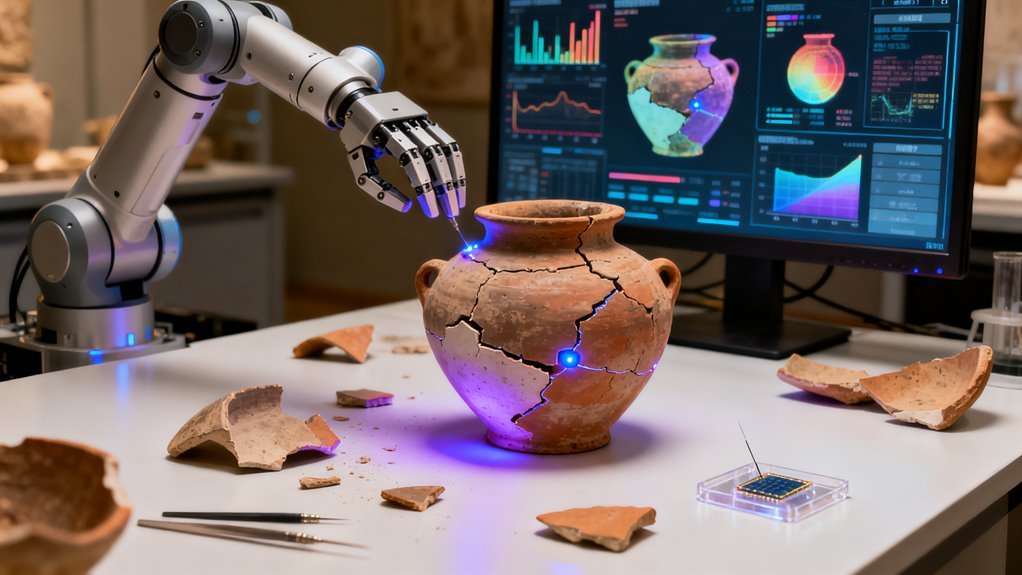





6 comments
Comments are closed.